
Practical skipper guides
Decision-first field notes for training, charter preparation, passage planning and distinctive Australian waters.
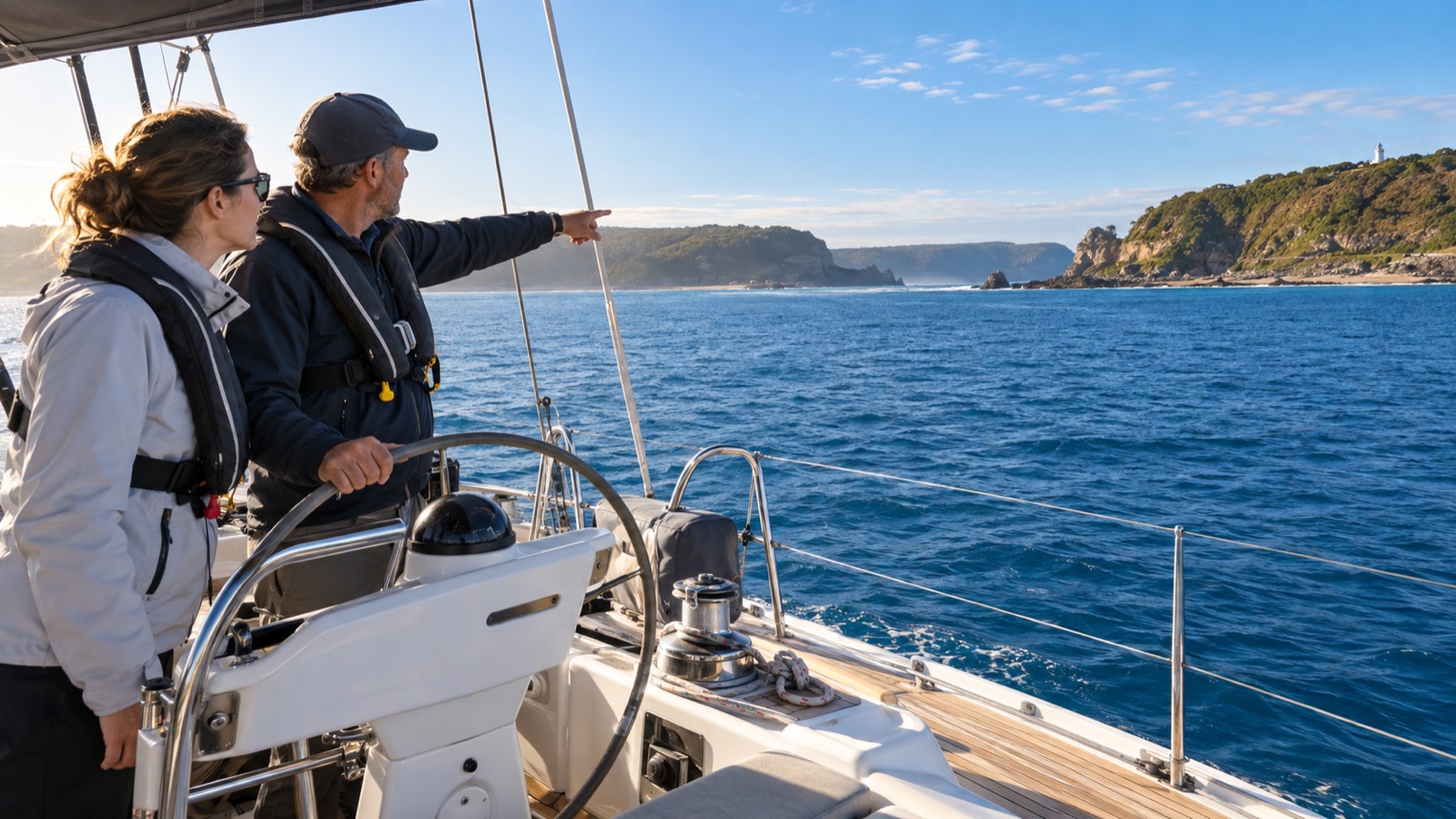
From first lesson to local passage.
These guides turn the course into practical next steps. Start with a pathway or training guide, then use a local-waters guide to identify the official information and questions that matter for your route. They are educational prompts, not live navigation advice.
Planning and progression
Six guides for choosing training, gathering experience and making conservative decisions.
How to choose your skipper pathway in Australia
Begin with the activity you want to do, the waters you will use and whether anyone is paying you. Those three facts usually identify the system you need to investigate.
Read guideYour first 90 days of practical boat training
Progress is safer when every session has one objective, a capable mentor and a short debrief. Build repeatable routines before adding distance, weather or responsibility.
Read guideBareboat charter readiness checklist
Charter readiness is more than presenting a certificate. Operators assess whether your recent experience matches their boat, operating area and expected conditions.
Read guideCoastal passage planning checklist for Australian waters
A passage plan is a decision system: route, hazards, timing, limits, alternatives and monitoring. It must keep working after the boat leaves the berth.
Read guideHow to keep a useful skipper sea-time logbook
A useful logbook records what you did, where, on which vessel, in what conditions and who can verify it. Detail is easier to capture on the day than years later.
Read guideCoastal bar crossings: a conservative go/no-go framework
Bar conditions can change rapidly and a past crossing does not prove the next one is safe. Local official advice, vessel suitability and a wide safety margin must all agree.
Read guideLocal waters
Seven regional orientation guides. Always replace general context with current charts, notices, forecasts and local authority advice.
Skipper’s guide to Sydney Harbour and Pittwater
These are busy, visually complex waterways. Prepare for commercial traffic, ferries, wash, speed zones and rapid changes between protected and exposed water.
Read guideWhitsundays skipper guide: plan a safer charter
A successful Whitsundays trip combines charter-operator limits with current weather, large tidal ranges, reef awareness and conservative anchorage selection.
Read guideMoreton Bay skipper guide for changing conditions
Moreton Bay rewards preparation: shallow water, strong weather changes, marked channels and busy approaches can combine quickly.
Read guidePort Phillip and Bass Strait gateway skipper guide
Port Phillip and an offshore Bass Strait passage are not one operating environment. Reassess weather, tide, traffic, crew and vessel before any exposed transition.
Read guideFremantle and south-west WA skipper guide
South-west WA planning depends on timing: sea breeze, swell, exposed coastline and distance between refuges can turn a simple itinerary into a demanding passage.
Read guideDarwin and Top End skipper guide
Top End boating combines large tidal movement, heat, tropical weather and potentially remote routes. Timing and self-sufficiency deserve more margin than the map alone suggests.
Read guideHobart and Tasmanian waters skipper guide
Tasmanian boating can move quickly from sheltered to exposed. Cold water, strong weather systems and limited refuge make preparation and early decisions critical.
Read guide